Wednesday, October 9, 2019

13 Classroom Math Hacks You’re Going to Want to Try

1. Turn your classroom door into a protractor. 


Thanks to Maria Howard from Beyond Long Division  for showing us how to make this protractor. It’s such a simple idea, but it really helps students see how to apply geometry to real life. 

2. Organize your math task cards. 
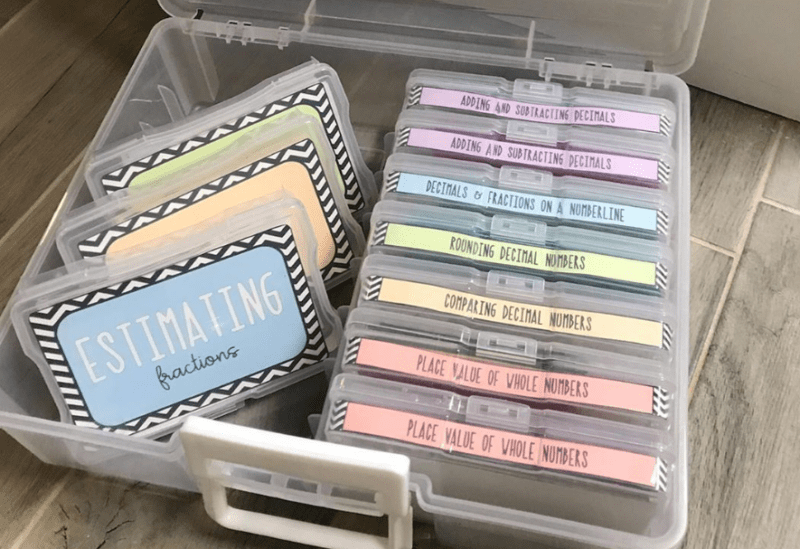
If you have lots of task cards for different math lessons, then consider keeping them all organized with a photo organizer. Students can easily grab a set at their convenience. 

3. Blank dice make great lessons. 
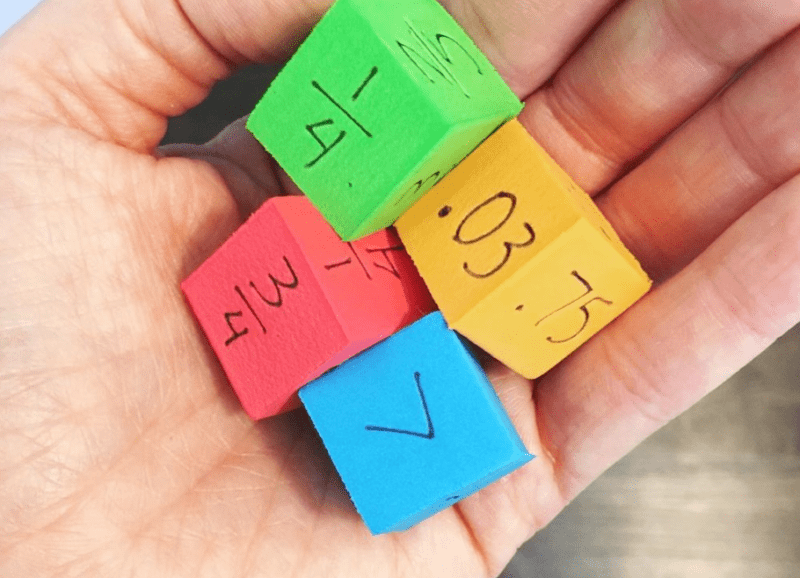
This teacher writes, “Dollar Tree says they are counting blocks. I say they are the world’s best open-ended dice.” She says she uses them for fractions, decimals, multiplication, comparing numbers, and more. Thanks for the great idea! 

4. Use stories to practice math lessons. 
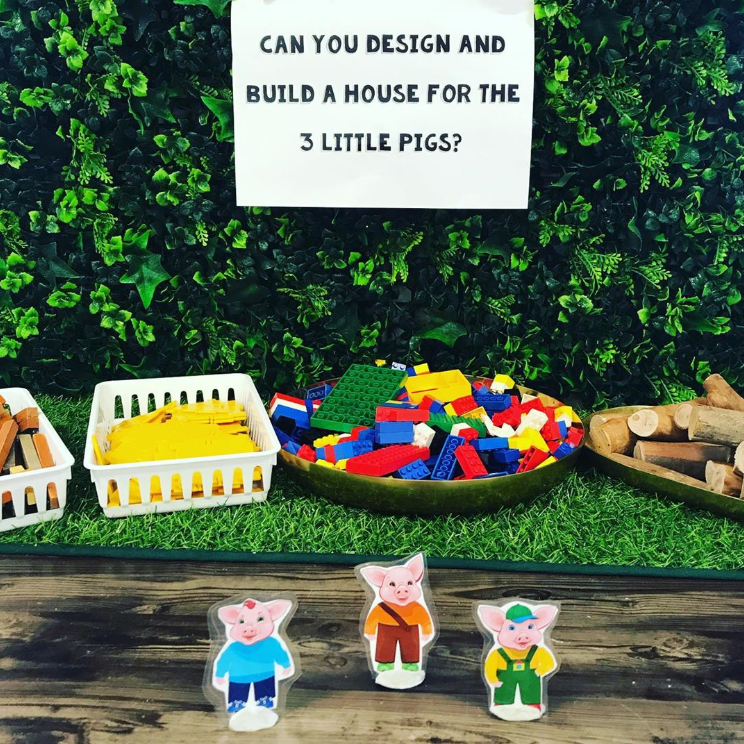
Mrs. Redfern impressed us with this idea for turning “The Three Little Pigs” into a math lesson . This is a STEM challenge that students will be excited to take on. 

5. Give them an entire wall to solve problems. 
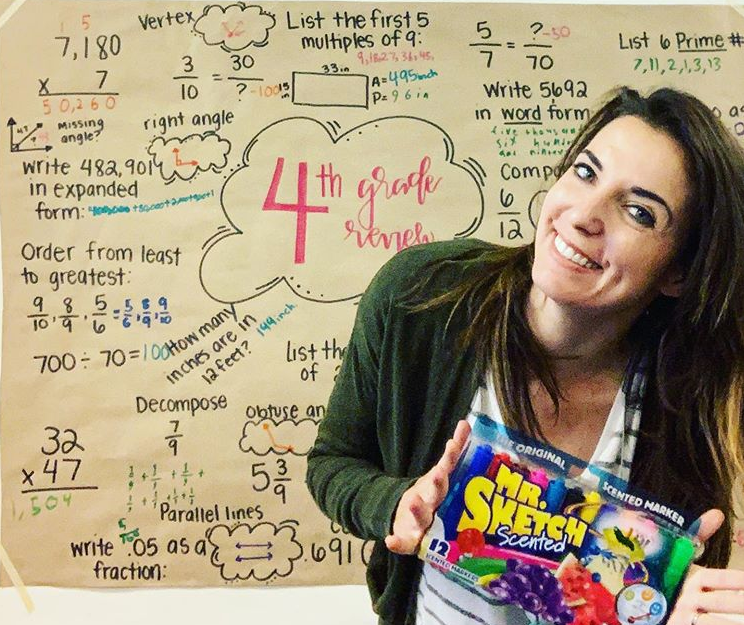
What happens when you give students a pack of Mr. Sketch markers and a giant wall of math problems? They get to work! We love this idea we found on Instagram. 

6. Use pool noodles to make fractions. 
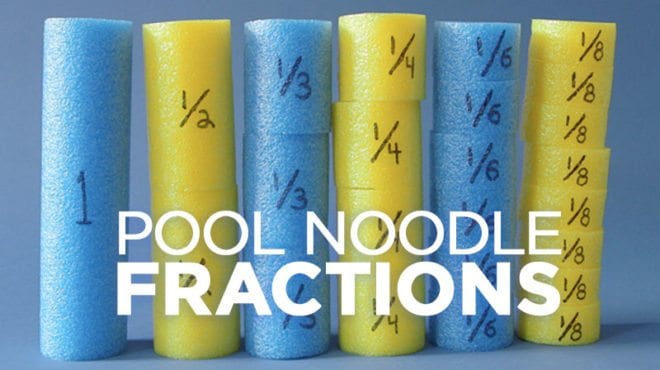
This is one of our most popular WeAreTeachers videos. Get our tips for turning ordinary pool noodles into a useful fractions lesson for your students.

7. Play a little subtraction bowling. 
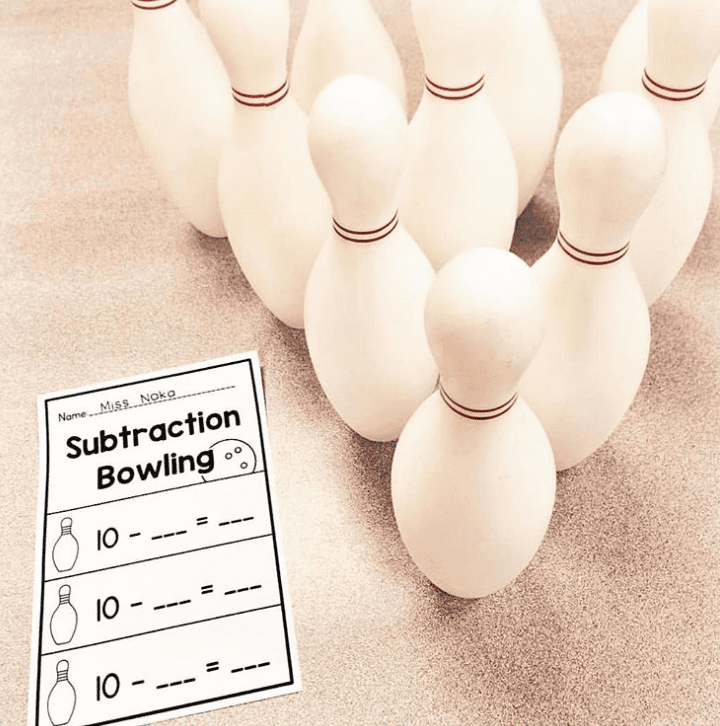
SOURCE: SW_and_Teach
Thanks to this teacher from Australia for the idea. Subtraction bowling is a great way for younger kids to really practice their addition and subtraction. 

8. Use your table to create an angles workstation. 
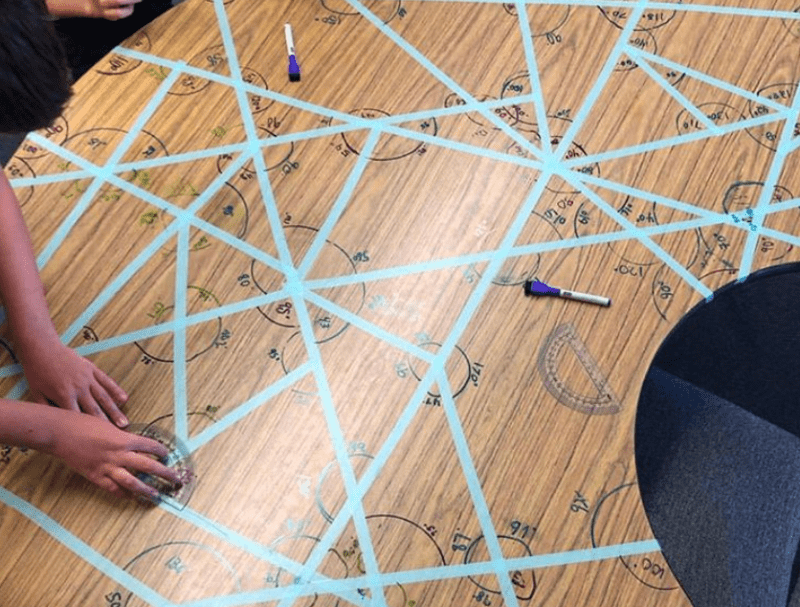
SOURCE: My Classbloom
This is another creative lesson using a tape. We love how this teacher took an ordinary table in her classroom to create a space where students can really do some hands-on learning. Let students use dry-erase markers to measure and write. Then wipe it off for them to try again and again. 

9. Try small tiles to tackle multiplication tables. 
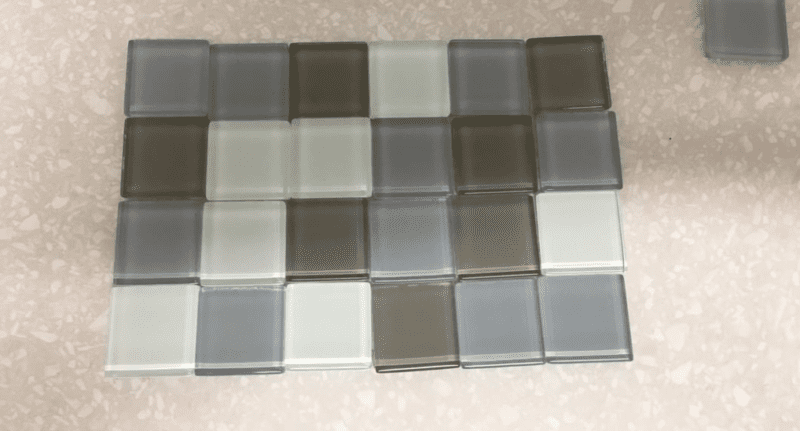
We love this tip from Hoffman Tutoring Group. They recommend getting your hands on small tiles to help students learn about multiplication tables. You can even write on these tiles with dry-erase markers. 

10. Use Post-its for your math lesson. 
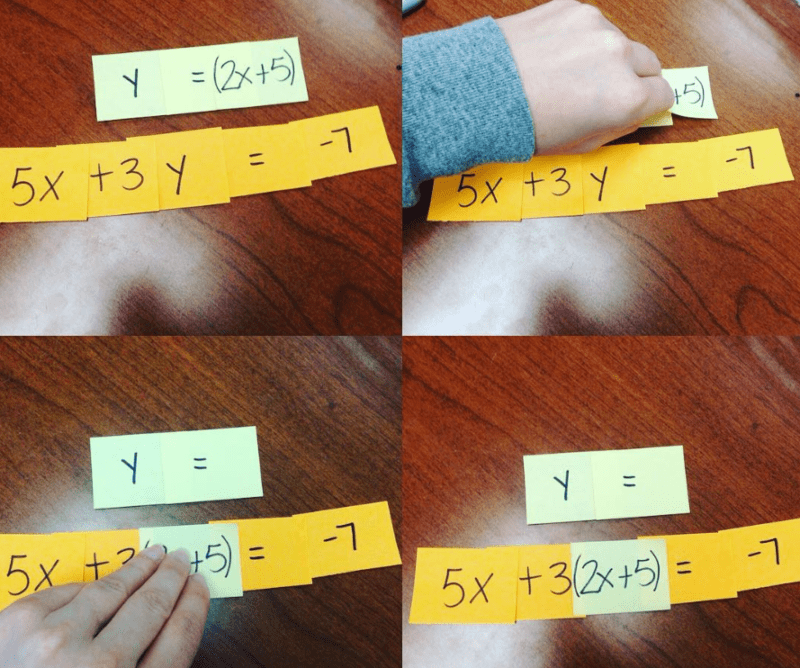
Post-it notes are an easy hands-on tool for checking for comprehension. You can use them as a way to write out and solve problems. Another idea is to write the problem out on a whiteboard or chalkboard, the way you normally would, including the answer. But cover the answer, allowing students to try to solve it before revealing if they’re right. 

11. Make a shape station. 
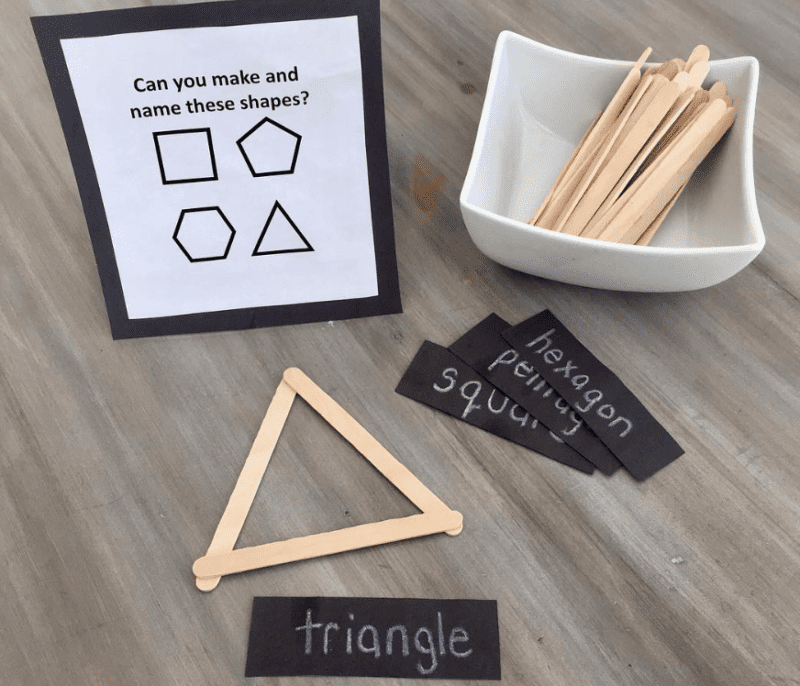
Encourage your students to make different shapes using ordinary objects, like wooden craft sticks. You can have several students practice at once, or use it as a center activity. 

12. Make your clock work double time. 
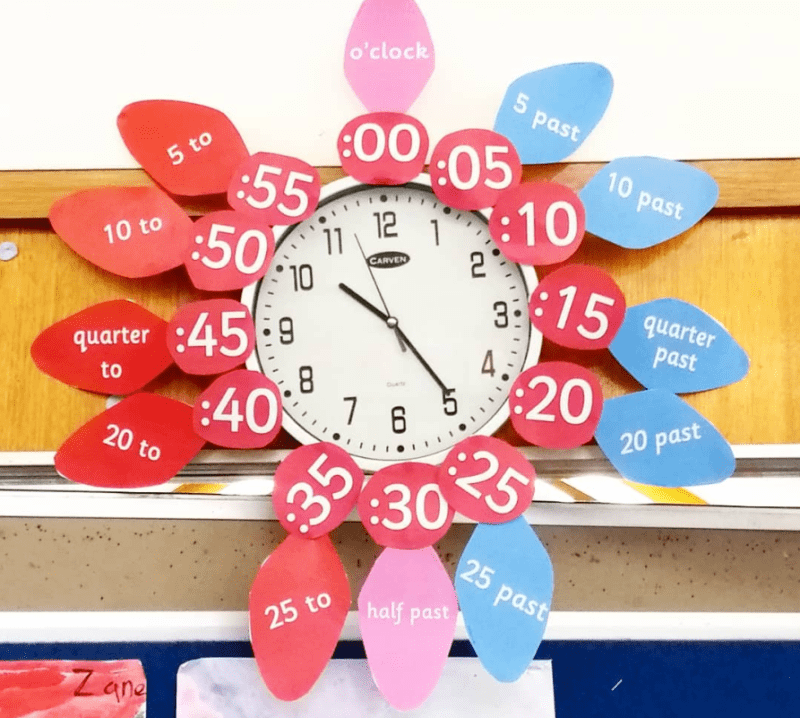
Clocks have so many great lessons built in. Add labels and notes to yours to help students better understand the language around reading a clock. 

13. Play math bingo. 
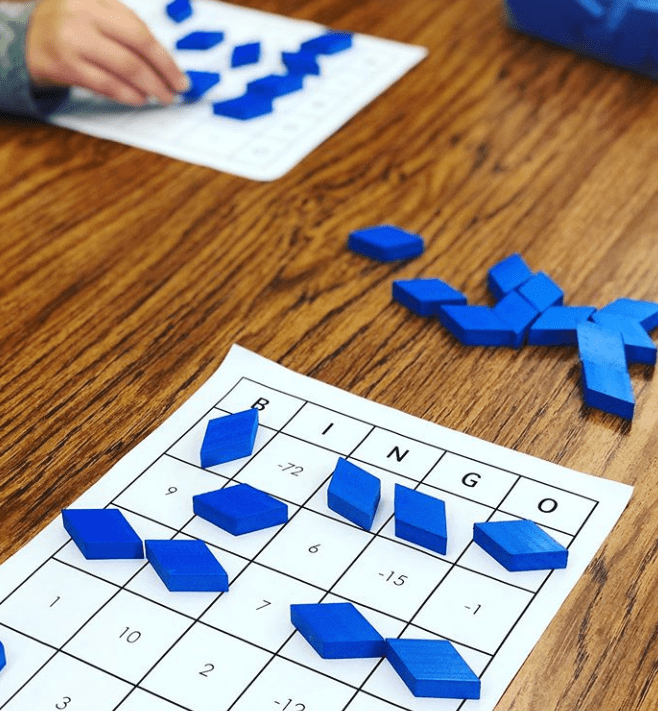
Math bingo is something that you can always bring out to give students a little break. You can make your own or find several options on Pinterest. 

Souce: 

16 Card Games That Will Turn Your Students Into Math Aces

1. Try for a total of 10.

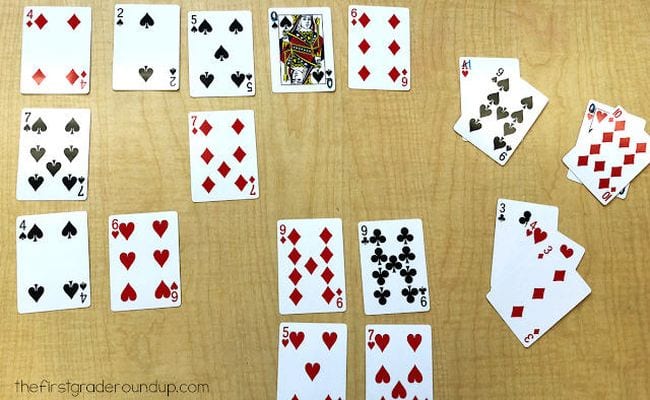
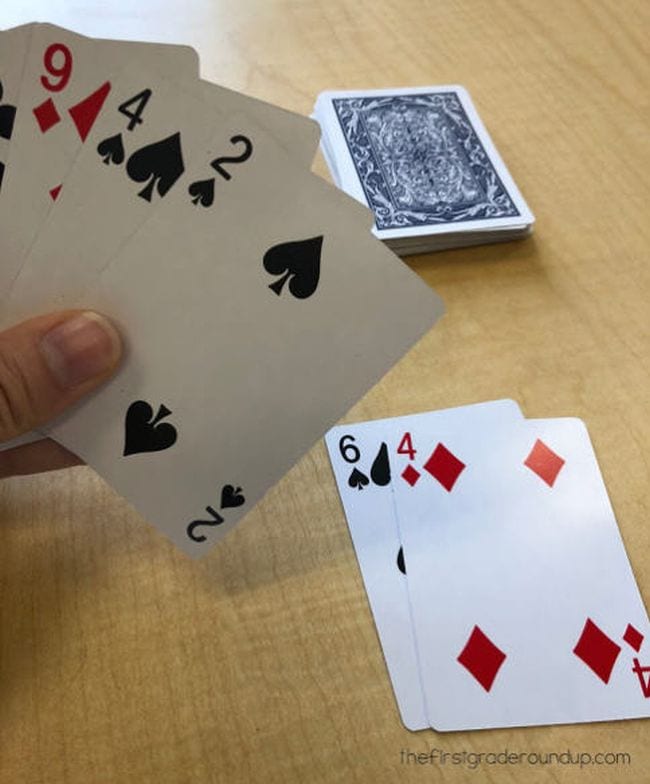
Math Card Games The First Grader Roundup
Play this math card game alone or as a team. Lay out 20 cards on the table (leave out face cards or change them to equal 0, while aces equal 1). Kids remove sets of cards that add up to 10, ultimately trying to remove all the cards from the table. It’s harder than you think!

2. Declare a fraction war.


War is one of the original math card games, but this version adds a fraction aspect. Students deal two cards, a numerator and denominator, then determine whose fraction is the largest. The winner keeps all four cards, and play continues until the cards are gone. 

3. Learn numbers with card bingo.

Remove the face cards and have each student lay out a 4 x 4 playing “board” of cards. Remaining cards (or another deck) are placed face down, and a caller flips over a card. Any player who has that number on their board turns the card face down. Play continues until one player has a row flipped over horizontally, vertically, or diagonally and calls “Bingo!”

4. Find a way to make 10 (or 15, or 20 … )

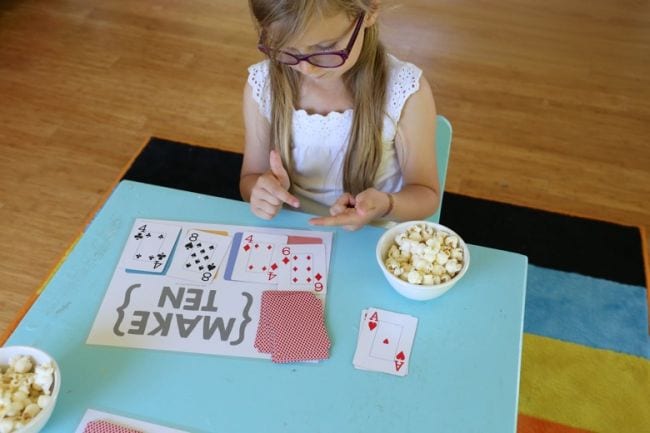
One of the terrific things about math card games is that many of them can be customized for various concepts and skill levels. The original goal of this game was to look at the cards you’re dealt to find ones that add up to 10, but it can be changed to 15, 20, or any number you choose. You can also add to the difficulty by allowing addition and subtraction (for example, you could use 8+4=12 or 12-2=10). Get the rules and free printable mats at the link below.
Learn more: Mama.Papa.Bubba

5. Practice number sequencing with builder’s paradise.

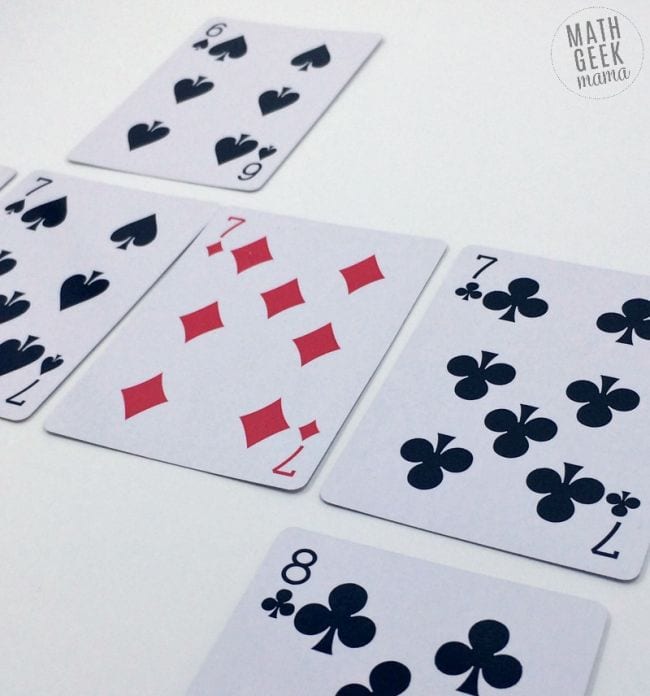
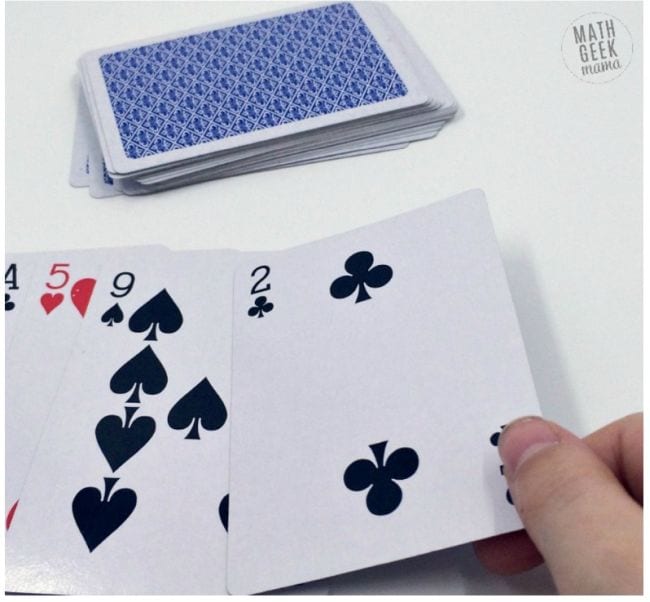
Math Card Games Math Geek Mama
Simple math card games can help kids learn how to put numbers in order. To play builder’s paradise, discard the face cards and lay out the 4 sevens in a deck side by side. In each round, players work to add the next higher or lower number in each suit, trying to be the first to get rid of all their cards. Get the full how-to at the link below.
Learn more: Math Geek Mama

6. Do some basic fast facts practice.

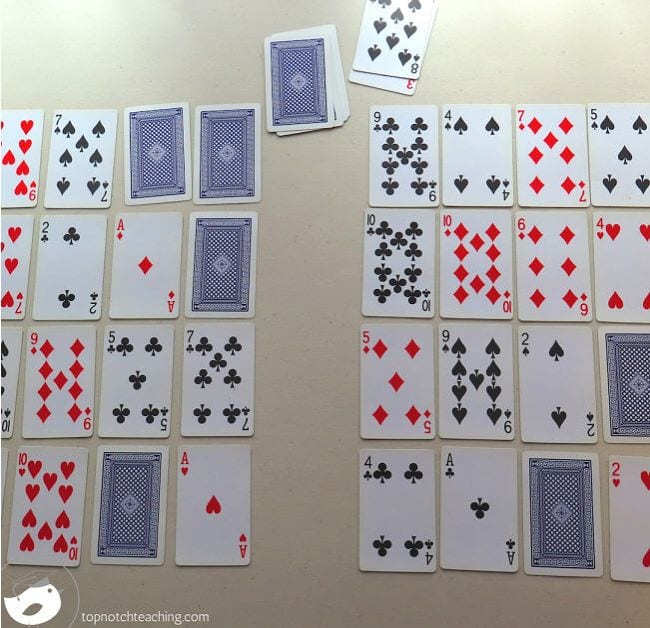
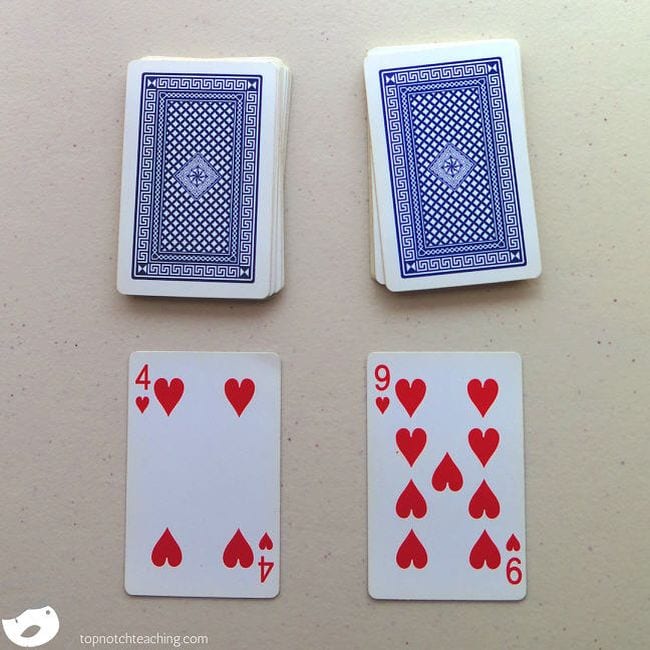
Math Card Games Top Notch Teaching 2
Give your flash cards a rest and practice facts with math card games instead. Simply lay down two cards from the deck (remove the face cards first) and add, subtract, or multiply them. Kids can work on this alone, or you can make it a contest to see who can call out the correct answer first.

7. Play pyramid solitaire alone or in teams.

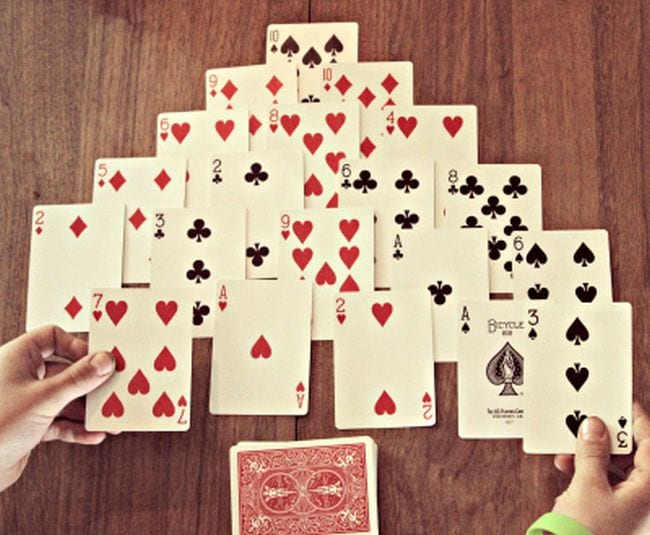
Math Card Games Multiplication dot com
Some versions of solitaire are really just sneaky math card games, and pyramid is one of them. Try to find cards that add up to 10 as you clear your pyramid row by row. Learn how to play at the link below.
Learn more: Multiplication.com


8. Go fishing for pairs that make 10.

Math Card Games The First Grader Roundup 2
Your students probably already know how to play Go Fish, but in this version, they’re fishing for pairs that add up to 10. Have them ask: “I have a 2. Do you have an 8 to make 10?” Change aces to 1 for this game and leave face cards out entirely.

9. Challenge them to beat the teacher.

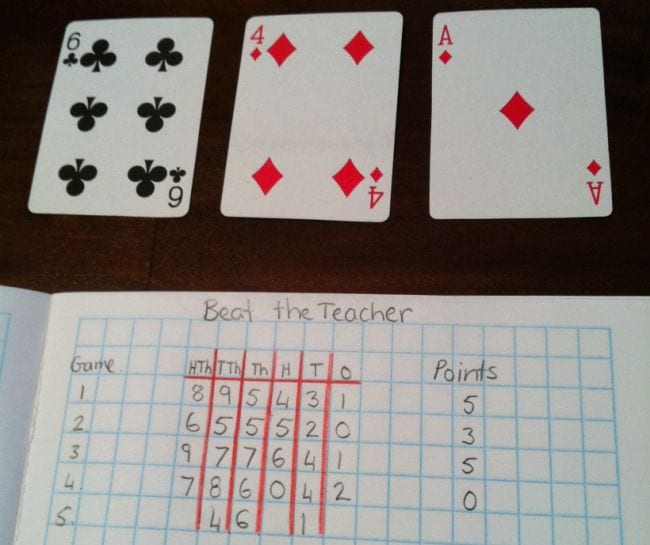
Math Card Games Relief Teaching Ideas
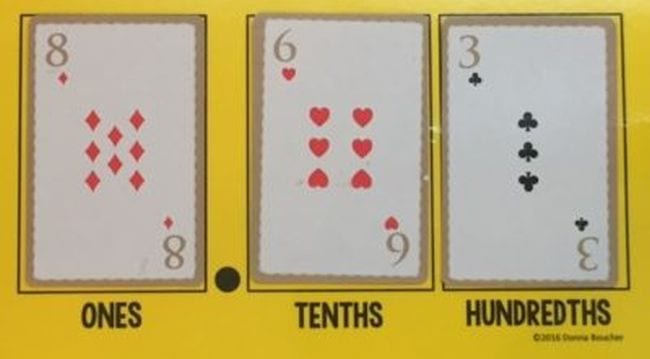
Practice place value by drawing cards and trying to build the largest number possible. Kids play against the teacher to see who wins! Get the rules at the link below. (Find more fun place value activities here.)
Learn more: Relief Teaching Ideas

10. Use Close Call to practice two-digit addition or subtraction.

Math Card Games Math Geek Mama 2
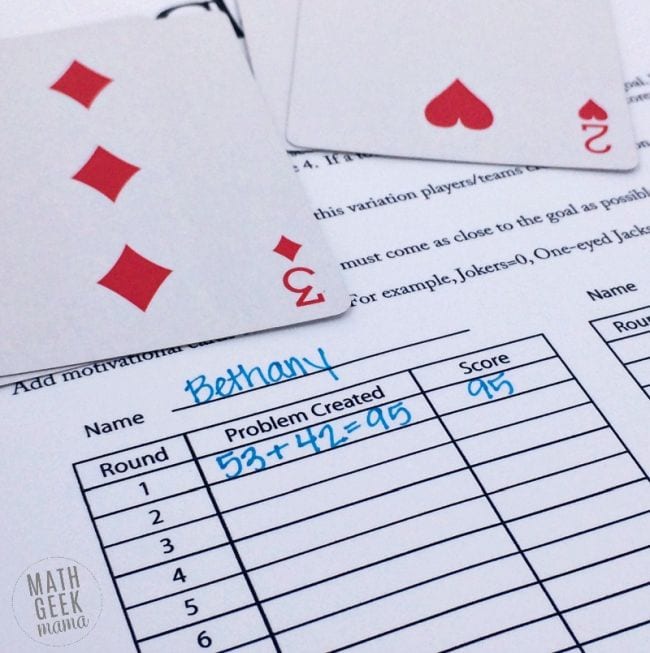
The best math card games are simple at heart. To play Close Call, each player deals themselves four cards then determines how to arrange them so they make two two-digit numbers that add up close to 100 without going over. For a subtraction version, work to get as close to zero as possible. Learn how to play at the link.
Learn more: Math Geek Mama

11. Use order of operations to get to 24.

Math Card Games Learn With Math Games
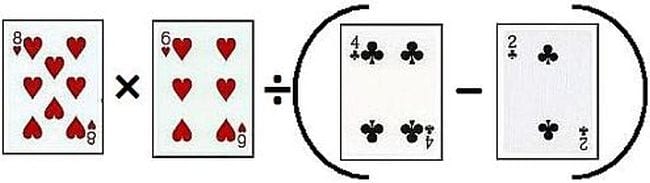
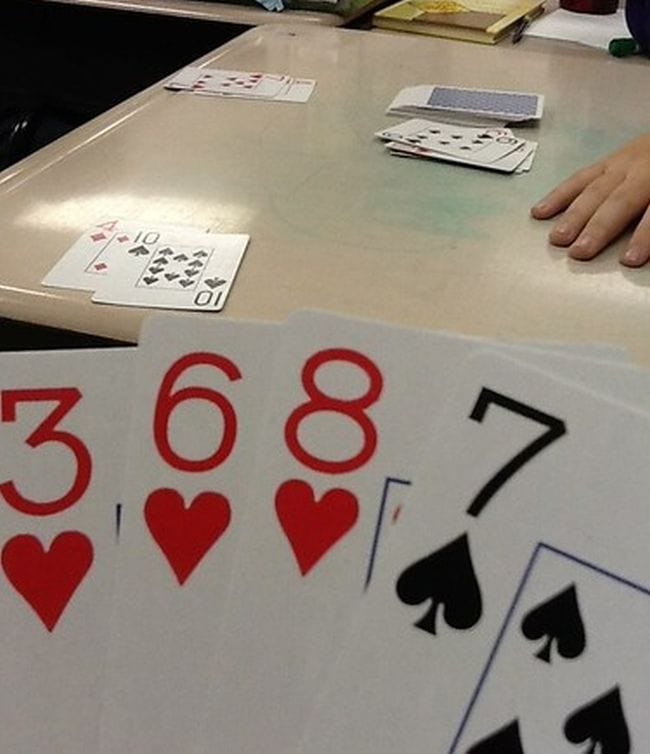
Math card games aren’t just for little kids; even adults will find this one a bit tricky. Each player is dealt four cards, then uses the order-of-operations rules to try to make a number as close to 24 as possible. Simple but challenging!
Learn more: Learn With Math Games

12. Let card color indicate negative or positive.

In this game, red cards are negative integers while black cards are positive. Students attempt to play pairs of cards that total 6 or -6. You can change the goal number as needed.

13. Take a trip around the card spiral to practice math facts.

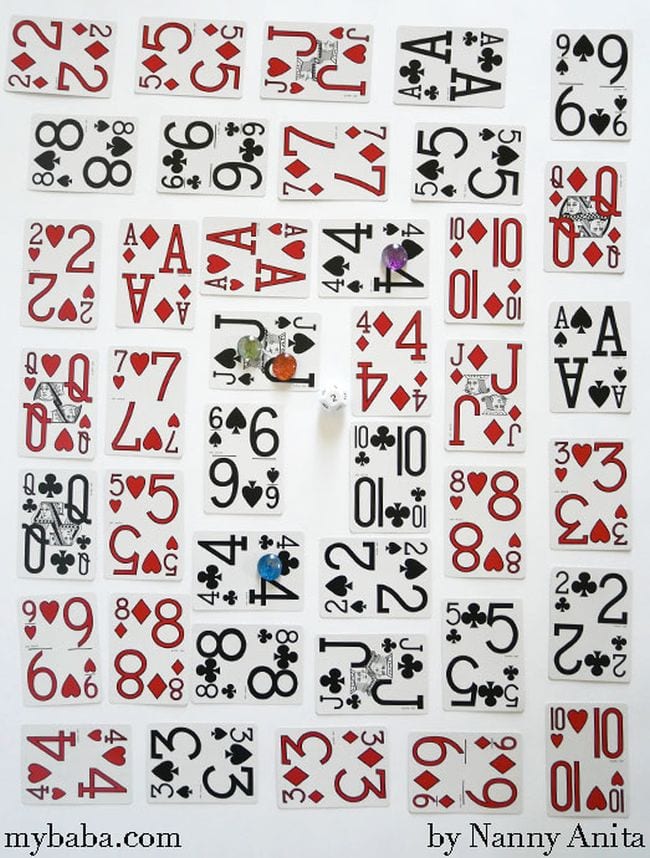
Math Card Games My Baba
You’ll need a pair of dice for this math card game. Lay cards out randomly in a spiral formation as shown, and set a marker for each player on the center card. Player one rolls the dice then moves their piece that number of spaces shown. They then must multiply (or add or subtract, depending on preferences) the card number by the number on the dice. If they get the answer correct, they stay where they are. If not, they return to their original card. Play continues until one player reaches the end.
Learn more: My Baba

14. Be the fastest in the race to pi.

Math Card Games Math Geek Mama 3
In this game, kids work to lay out the digits of pi in order. It’s a simple draw-and-play game, but will help familiarize students with this important number. You can write out the digits first or see who knows them from memory. Find out how to play at the link below.
Learn more: Math Geek Mama

15. Take a gamble with triple-digit dare.

Each player gets three cards and privately determines the highest three-digit number they can make (you can use decimals or not, depending on age). Then, each player has a turn to stick with the cards they have, swap with one from the deck, or steal one of the other player’s. All players then lay down their best number to see who wins. See more at the link below.
Learn more: Math Coach’s Corner

16. Try reading minds to figure out the correct numbers.

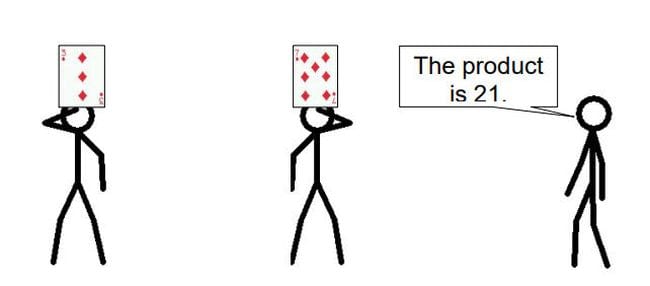
Two students draw a card from the deck without looking and hold it up to their forehead facing out. A third student mentally multiplies the numbers and gives them the product. The students then must figure out what number each is holding. You can do this with addition and subtraction too. You’ll find this game along with dozens of other math card games in the free printable book at the link below.
Learn more: Acing Math

Source: www.weareteachers.com

QUARTER 3 - MATH 10 REVIEWER

QUARTER 3 - MATH 10 REVIEWER https://drive.google.com/file/d/1beT36UqpRqV1fw-6eQuWeMk-ARa1Cn4u/view?usp=sharing